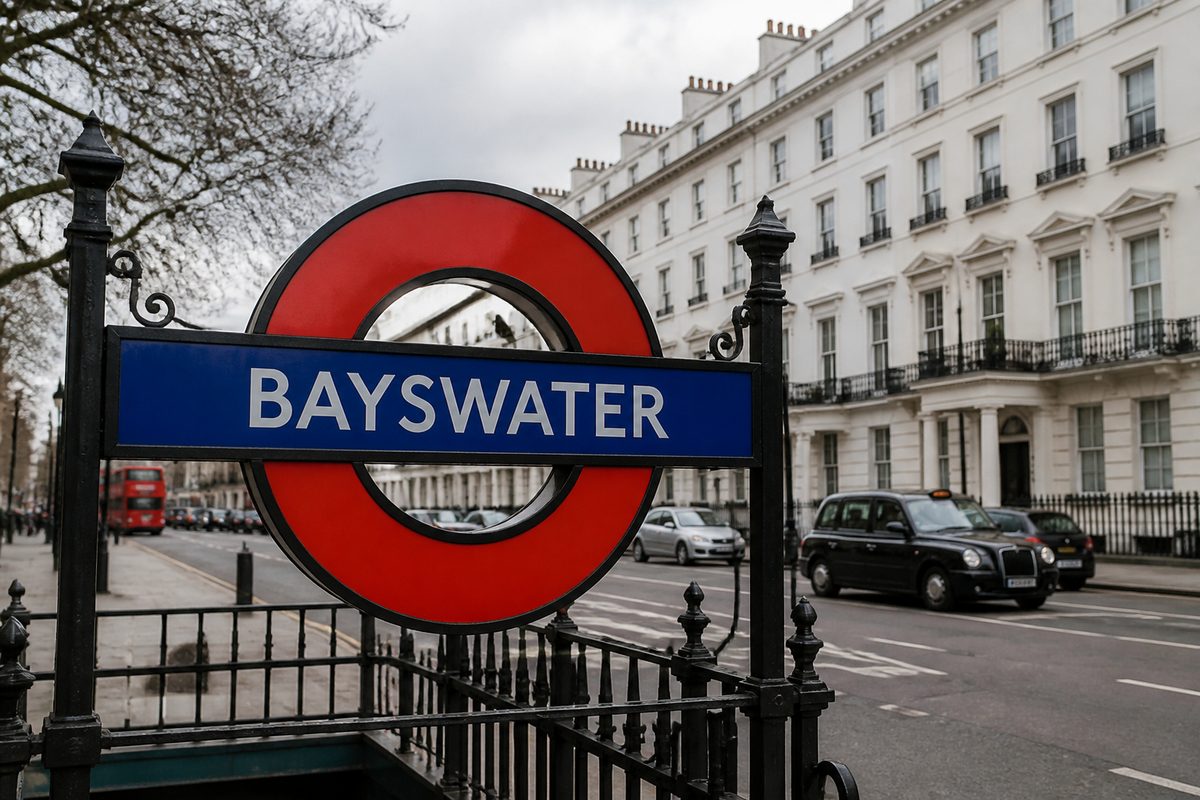
Bayswater in Victoria was most likely named after Bayswater in London. The Victorian name appeared in the 1880s, when the growing settlement needed an identity of its own. London's name is far older and may come from Baynard's Watering Place, a stop where travellers and horses could get water.
So this is a chain of names, not one simple naming event. The Australian suburb borrowed a familiar British place name. That British name may hold the memory of a person, a water source and an old road out of London.
The first link in this chain is strong. Local histories connect the Victorian suburb to Bayswater in England, but the older meaning of the English name is less clear. Several spellings and explanations have appeared over time, so the popular watering-place story is a likely origin, not a proven fact.
What was the Victorian area called before Bayswater?
The district didn't start with a fixed suburban name. European settlers knew the wider area through broad district labels, road names and nearby settlements. Scoresby was a key reference point, and the place that became Bayswater was often called the northern part of that district.
That worked while few people lived there. Farms, tracks and scattered homes didn't need the firm borders of a modern suburb. Someone could describe a property by its parish, road, neighbour or distance from a better-known town.
But that loose system became less useful as the settlement grew. Postal workers needed clear destinations, while residents needed a shared name for local groups, businesses and public services. A distinct name helped turn a rural pocket into a place people could call their own.
The local post office marks this change. It opened as Scoresby North in the early 1880s, then was soon renamed Bayswater. Postal names often gave settlements a working identity before official suburb borders existed, with letters, notices and directories carrying the new name beyond the district.
Bayswater didn't replace an ancient local name with a known Indigenous meaning. Instead, it replaced a practical European district label used during early colonial settlement. The name comes from the period when residents were shaping a separate township.
Why was a name from England chosen?
British place names were common across colonial Australia. Settlers, landowners and officials reused names they knew from home. A name might recall a birthplace, honour someone or simply give a new settlement a familiar ring.
Bayswater fit that pattern. The English district was well known enough for its name to travel, and it sounded right for a settled community. By the late nineteenth century, a British name could make a small place seem established, even if farms and bush roads still covered most of it.
No surviving account gives us a tidy scene where one known person points to the Victorian district and declares it Bayswater. That missing moment matters. Many local names took hold through everyday use, perhaps starting at a post office, appearing in directories and then spreading through ordinary speech.
That's why the most accurate answer says “most likely.” The link to the English Bayswater is widely accepted, but records don't securely name the chooser or explain that person's reason. Claims about a certain view, creek or body of water directly inspiring the Victorian name don't have the same support.
The local landscape can make those claims tempting. Bayswater sits near creeks and low ground, while “bay” plus “water” looks like a plain description. But breaking an old place name into modern English words can create a false story, and the recorded British link offers a better answer.
When did Bayswater become the name people used?
The key decade was the 1880s. Renaming the post office gave the area an official public label. When the railway arrived later that decade, the name became much more visible.
A railway station put the name on signs, tickets, maps and timetables. Travellers began using it to say where they lived or where they were going. Nearby businesses picked it up because customers already knew it.
That doesn't mean the railway invented the name. The post office used it first, while the railway helped lock Bayswater in as the district's accepted identity. This difference avoids a common local-history mistake: mixing up the event that spread a name with the event that created it.
Names settle through repetition. A farmer writes Bayswater on a letter, a newspaper prints it in a notice, and a rail passenger asks for a ticket. Then a shop puts it in an ad, making the label a little harder to replace.
Older descriptions didn't disappear overnight. People could still mention Scoresby, nearby roads or parish areas when those terms worked better. In time, though, Bayswater became the clearest answer when someone asked where the community was.
Where did the London name come from?
The story grows older and murkier once the trail reaches London. Bayswater developed beside the road now called Bayswater Road, along the northern edge of Hyde Park. The area lay west of the old centre and was built up heavily during the nineteenth century.
A common explanation traces the name to Baynard's Watering Place. In this story, the spot was tied to a man named Baynard and a place where travellers or horses could find water. Years of speech and shifting spelling may then have shortened the longer phrase into Bayswater.
That explanation suits the old road. Watering points mattered before engines and piped public water, since horses needed regular drinks and travellers remembered reliable stops. One useful feature could lend its name to all the land around it.
Old versions of the London name appear with different spellings. That's normal for names passed on by speech before their spelling became fixed. Clerks wrote what they heard, and later writers tried to tie those versions to known people or properties.
The evidence doesn't prove each step from Baynard to Bayswater. Some accounts mention a Baynard family, while others point to a certain landholder. But the main idea stays the same: the name probably joined a person's name with a water source or watering place.
That origin also shows why the word shouldn't be read as a simple reference to a coastal bay. London's Bayswater is inland. Its name points to water used along a route, not seawater beside a bay.
How does Queensway fit into the story?
Queensway is a major street running through London's Bayswater district. It helps modern readers find the place that lent its name to the Victorian suburb. Bayswater Underground station stands on Queensway, with Queensway Underground station nearby on the same street.
The street was once called Queen's Road before becoming Queensway. Its modern identity came during a later stage in the district's growth. It didn't create the name Bayswater and isn't its source.
The link is still handy because street and station names hold layers of city history. Someone walking along Queensway today is passing through the English Bayswater that likely inspired the Victorian name. That busy city scene looks nothing like the old roadside watering place thought to sit beneath the name.
What a journey for one place name. A term tied to water and horses became the name of a packed London neighbourhood. Then it crossed the world and landed on a rural Victorian settlement that later became a Melbourne suburb.
Does the name have anything to do with a local bay?
No known naming record links Victoria's Bayswater to a local bay. The suburb lies inland, and its landscape has no clear bay that would explain the name.
The mistake starts when Bayswater is read as two descriptive words. Place names often remain long after their first meaning has faded. Their spelling may also shift until they look like familiar words that played no part in the original name.
The same caution applies to the word “water.” Local creeks may seem to back up a Victorian water-based origin, but a resemblance isn't proof. The watering-place link belongs to the suggested history of the London name and shouldn't be shifted to Victoria without records showing local settlers made that link.
A sound account keeps the two stages apart:
- The Victorian community adopted the established name Bayswater, most likely from the district in London.
- The London name may have developed from Baynard's Watering Place or a related older form.
This removes any need to invent a local bay, spring or grand naming moment.
Who actually chose the Victorian name?
We don't firmly know who chose it. Later accounts sometimes turn a shaky naming history into a sure tale about one settler. The surviving evidence backs the English link more strongly than any single named chooser.
That missing detail doesn't make the whole origin unknowable. Historical confidence comes in levels: the change from Scoresby North to Bayswater fits the growth of postal and community services. The London link also matches colonial naming habits and appears in local histories, though no record preserves the exact talk behind the choice.
This happens often in suburb-name research. Government records may show when officials started using a name, but not why residents liked it. Newspapers may report a meeting yet miss earlier casual use, while family stories can add detail but need support from records made close to the event.
An honest account beats a polished legend. Bayswater gained its name while the settlement formed its own identity in the 1880s. The name almost certainly looked back to England, but whoever first suggested it remains unknown.
What does the name reveal about the suburb?
The name records a colonial link more than a feature of the local land. It shows how settlers used familiar British places to name new communities in Australia. The result is one suburb name with two histories: one based in Victorian settlement and another stretching back through London.
It also shows how a borrowed name can become local. Once Bayswater appeared on letters, station signs and maps, residents filled it with fresh meaning through daily use. The word came to mean their roads, homes and community, not the English district that inspired it.
That process doesn't wipe away the deeper history of the land or the people who knew it before European settlement. A colonial suburb name covers just one period in a far longer human story. It shows how newcomers mapped and labelled the district, not when the place itself began.
The lesson is simple: think of Bayswater as a travelled name. Trace the Victorian suburb back to London. Then treat Baynard's Watering Place as the likely older root, not a proven local story.
How should you remember the full origin?
Remember the name as a two-step trip. Victorian Bayswater took its identity from the established English place name during the 1880s. London's Bayswater may keep an old reference to Baynard and a roadside water source.
The post office helped set the local name in place. The railway made it visible and lasting. Queensway offers a modern landmark in the London district, but it isn't the source of the name.
When you explain why Bayswater is called Bayswater, start with the London link and present Baynard's watering place as the likely deeper origin, not as a proven Victorian landmark.